¶ Use a passive antenna when
The antenna-to-receiver RF path is short
RF losses before the receiver are minimal
The receiver is designed to work with a passive antenna
Low power and simple integration are priorities
GPS / GNSS antenna integration
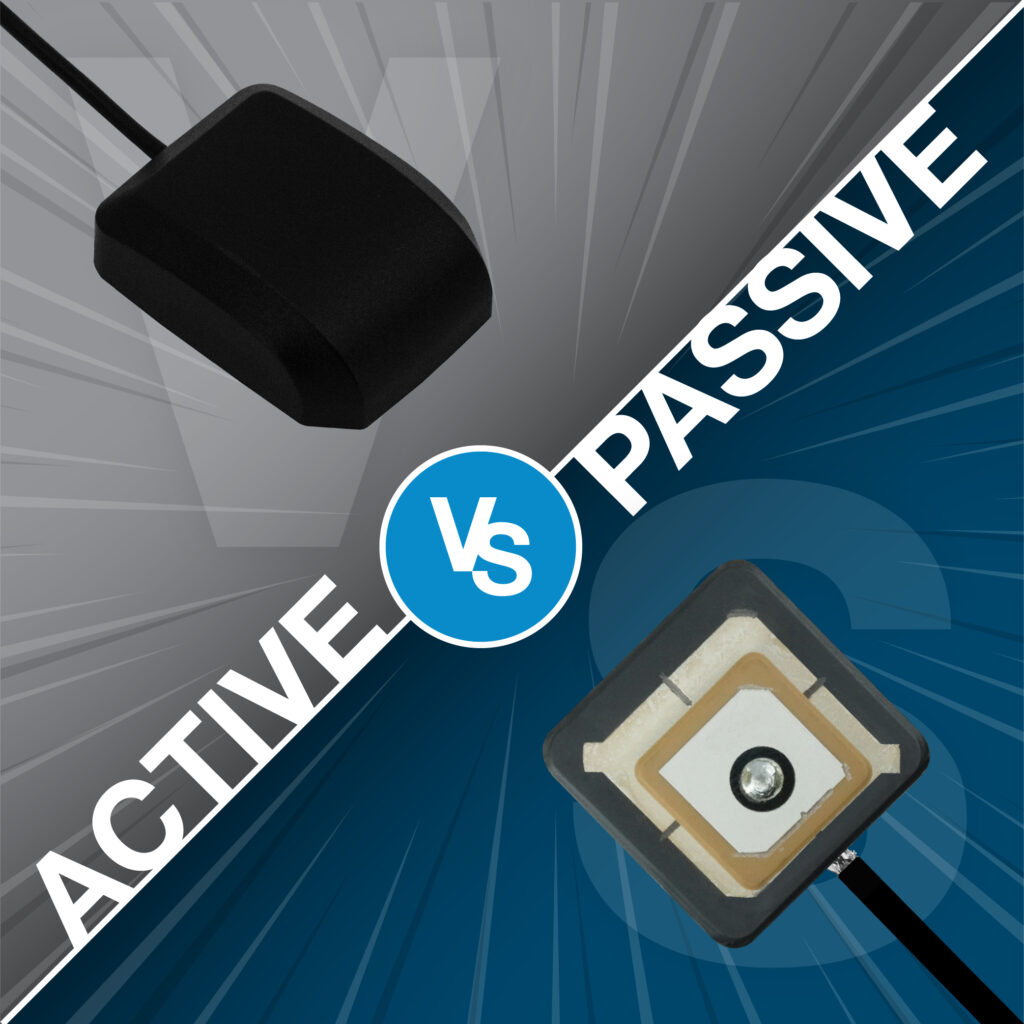
When comparing active vs passive GPS antennas, the key difference is where signal gain is introduced in the RF signal chain.
A passive GPS antenna consists only of the antenna element. It receives GNSS signals and passes them directly to the receiver with no amplification. In contrast, an active GPS antenna integrates a low-noise amplifier (LNA) directly after the antenna element, increasing the signal level before it passes through downstream cable, connector or PCB losses.
This distinction matters because GNSS signals arrive at the antenna at extremely low power levels. The right choice depends on the receiver, RF path loss, available antenna power and how the antenna is installed.
An active GPS antenna places a low-noise amplifier close to the antenna element, usually with filtering as part of the active RF stage. This allows the received GNSS signal to be amplified before it encounters losses further along the signal path.
Active antennas are commonly used when:
Excessive LNA gain can overload the receiver front-end, amplify unwanted RF energy from nearby transmitters and reduce available system dynamic range. Antenna gain therefore needs to be considered alongside cable loss and the receiver's recommended RF input conditions.

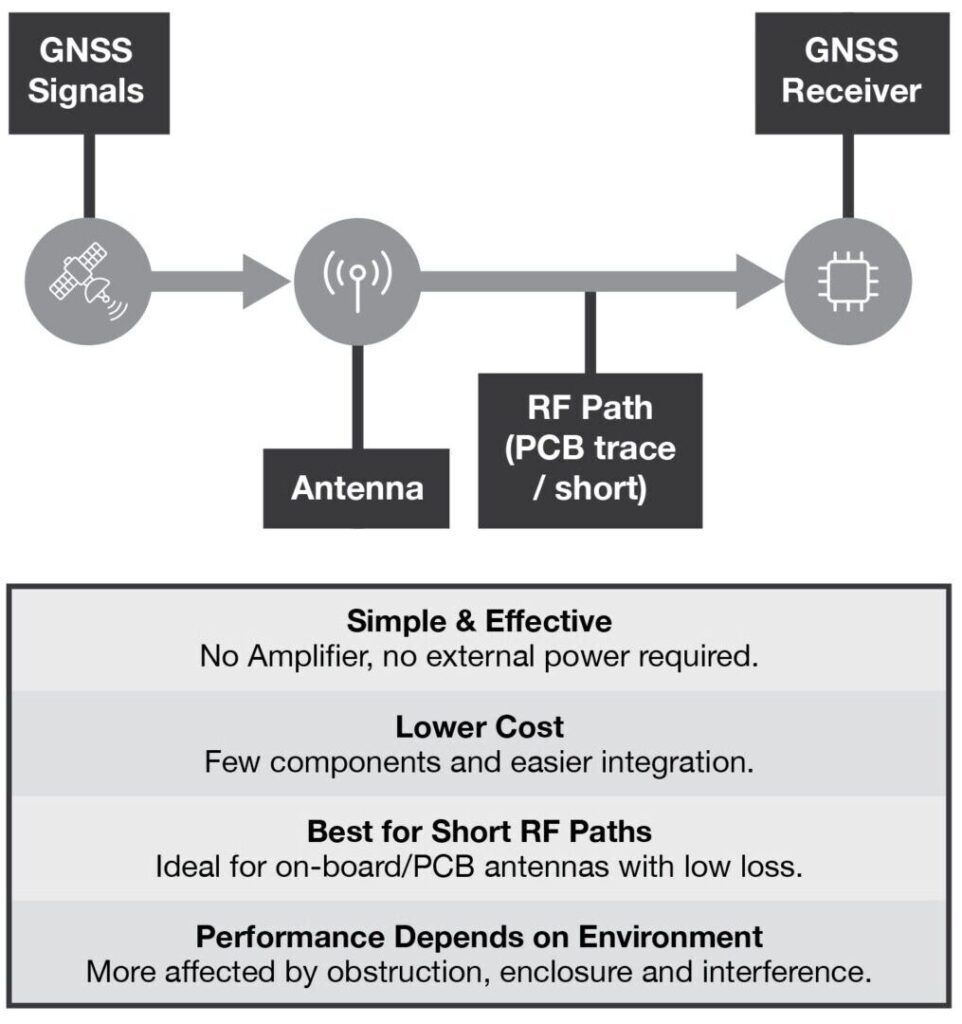
A passive GPS antenna contains no LNA. The received signal passes directly from the antenna element towards the receiver, which makes the RF path between the antenna and the receiver particularly important.
Passive antennas are typically used in:
They offer several practical advantages:
The trade-off is that there is no antenna-side amplification available to overcome downstream loss. Placement, the RF path, ground plane and overall antenna integration therefore become particularly important.
Using a passive patch antenna? See how GPS antenna ground plane size and placement affect performanceThe active vs passive decision is not simply about adding more gain. The important question is where loss occurs relative to the first low-noise amplifier in the system.
With a passive antenna, losses in PCB traces, connectors or cable occur before the receiver's first amplification stage. That loss directly affects the signal presented to the receiver.
With an active antenna, the LNA is positioned close to the antenna element. The signal is therefore amplified before downstream cable and connector losses occur, reducing their impact on the complete receiver chain.
Loss occurs while the received GNSS signal is still at its lowest level.
Gain is applied before downstream cable and connector losses.
Higher LNA gain does not remove obstruction, metal shielding, multipath or poor antenna placement. Those problems need to be solved at the antenna installation itself.
Active antennas require DC power for the LNA. In many GNSS receivers this is supplied through the RF connector, allowing DC bias and the received GNSS signal to share the same coaxial cable.
The required voltage and current are antenna-specific. Always check the active antenna requirements against the receiver's antenna-bias output rather than assuming that any active antenna will be compatible.
Confirm the RF port can provide the voltage and current required by the antenna.
Match antenna LNA gain to RF path loss and the receiver's recommended input conditions.
An unpowered active stage can become additional attenuation in the signal path.
Quick engineering check
These four questions provide a useful starting point before selecting a specific antenna. They do not replace the GNSS receiver datasheet or a complete RF budget.
The result will indicate which architecture is the more logical starting point and which design constraint should be checked next.
The choice between active and passive GPS antennas is not simply a question of which antenna has more gain. It depends on the receiver architecture and what happens to the signal between the antenna element and the first low-noise amplification stage.
Need help with antenna selection?
Share your GNSS receiver, antenna location, cable length and enclosure details and our engineering team can help identify a suitable antenna architecture for your application.